
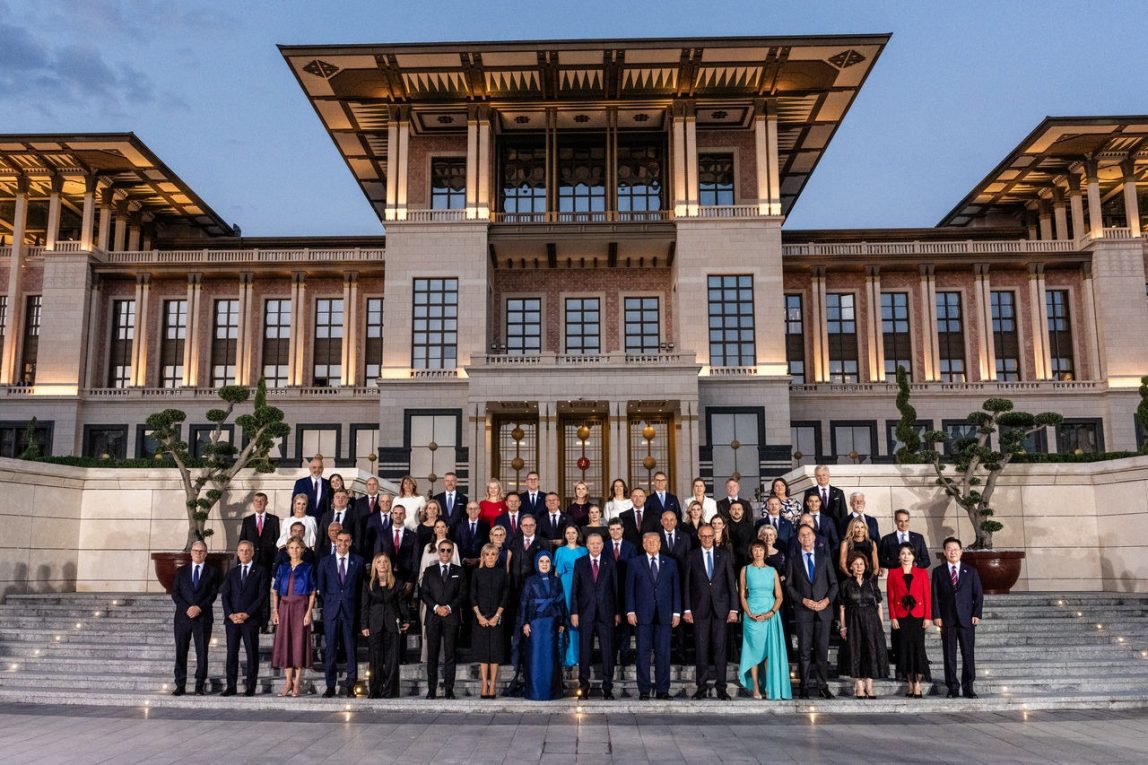
On 7 and 8 July 2026, world leaders met in Ankara for the NATO summit, where they discussed international security and the vital role the ‘transatlantic bond’ plays in keeping people safe around the world.
But many journalists from Türkiye’s independent media were noticeably absent – especially if they have been critical of the government or raised uncomfortable questions in the past.
This is not an isolated incident: Turkish authorities have a documented history of revoking press credentials for domestic and foreign journalists covering sensitive political events. Türkiye is ranked among the countries with the highest number of imprisoned journalists in annual press freedom surveys – including those by the Committee to Protect Journalists – with dozens imprisoned on charges linked to terrorism or insulting state institutions.
NATO’s Office of Strategic Communications has denied media accreditation for a host of independent journalists and media outlets, without providing any reasoning for the rejections and giving them no possibility to appeal – a sharp blow to freedom of expression and the public’s right to know.
The International Press Institute and other media freedom and human rights organisations and journalist groups raised the matter with Secretary General Mark Rutte. They called for full transparency about the criteria NATO applied in assessing media accreditation requests.
Among those rejected were journalists with extensive experience covering NATO summits.
On 25 June, a NATO spokesperson acknowledged that ‘for summits held outside NATO headquarters, NATO relies on the host nation to provide assessments on journalists from their own country to ensure access to the meeting site’.
This suggests NATO officials were willing to turn a blind eye to the Turkish government’s escalating efforts to censor reporting, despite its own media eligibility criteria, which include editorial independence. By outsourcing vetting decisions to the host nation, NATO effectively allows individual member states to define press freedom on their own terms, undermining its stated commitment to democratic values.
The Turkish government routinely and systematically uses press accreditation to pressure journalists. If NATO bows to influence by Turkish authorities wishing to silence media outlets and journalists for their editorial or political stance, it will mark a dangerous departure from international standards.
Freedom of the press is a cornerstone of every democratic society and an essential safeguard for the rule of law, transparency, and accountability. Rights Defenders Initiative (RDI) calls upon the Government of Türkiye to uphold its constitutional and international obligations by protecting journalists, ending undue restrictions on independent media, and ensuring that all members of the press can carry out their work free from intimidation, censorship, or judicial harassment. In an increasingly volatile global environment, defending media freedom is not solely the responsibility of national governments. We urge NATO, together with the United Nations, the European Union, and other international and regional organisations, to take meaningful and coordinated action to promote and protect freedom of expression and press freedom in Türkiye.
References
- https://www.reuters.com/business/media-telecom/dozens-turkish-journalists-denied-accreditation-nato-summit-ankara-media-says-2026-06-25/
- https://apnews.com/article/turkey-nato-summit-independent-journalists-accreditation-d9f0bb397713378d236e4c8226ab91f2
- https://www.ifj.org/media-centre/news/detail/category/press-releases/article/tuerkiye-accreditation-process-excludes-independent-local-journalists-from-nato-summit

