
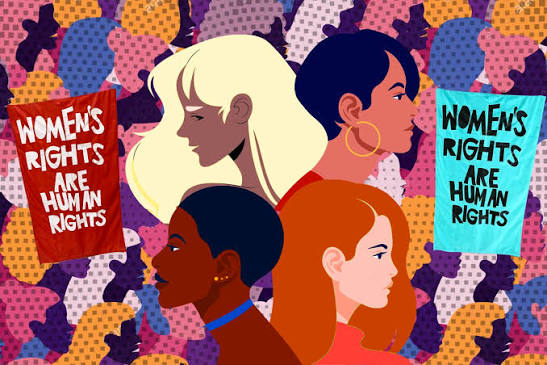
When people talk about progress, they usually think about technology. Every year, scientists discover new treatments for diseases, artificial intelligence becomes more advanced, and space exploration continues to expand. Looking at these achievements, it is easy to believe that the world is becoming a better place.
However, there is a question we do not ask often enough: can a society truly call itself progressive while millions of women are still denied their most basic rights simply because of their gender?
Although gender equality has improved in many parts of the world, discrimination against women remains a severe global issue. Too often, societies celebrate scientific achievements while overlooking the fact that millions of women still struggle to live safely, freely, and equally. For us, this raises a fundamental question: what does progress actually mean?
One compelling example can be seen in several African countries, where millions of girls remain at risk of female genital mutilation (FGM). Despite international campaigns, legal reforms, and decades of awareness programmes, the practice continues to impact millions of lives. FGM causes lifelong physical and psychological harm and permanently deprives girls of autonomy over their own bodies before they are even old enough to make informed decisions. This is not simply a cultural issue; it is a violation of basic human rights.
Perhaps the starkest example today is Afghanistan. Since the Taliban returned to power, millions of girls have been barred from attending secondary schools and universities, while many women have lost the right to work in various professions or participate fully in public life. Reading the accounts of Afghan women was one of the most distressing parts of researching this topic because behind every statistic is a real person whose future has been altered forever.
One Afghan woman interviewed by UN Women described her reality, stating, “Today, I am imprisoned in my own home simply for being a woman.” This single sentence reveals more than any statistic ever could. It demonstrates that discrimination is not merely about laws or politics; it profoundly impacts people’s everyday lives, mental health, and fundamental sense of freedom.
Another Afghan woman told the BBC: “I have lost my sense of self. There is no identity left for me now.” Education and employment are often viewed merely as opportunities, yet they are far more than that. They grant individuals independence, confidence, and the agency to shape their own future. When these rights are revoked, people lose far more than a seat in a classroom or a job.
International human rights law unequivocally recognises education, equality, and the right to work as fundamental rights. The Universal Declaration of Human Rights states that all human beings are born free and equal in dignity and rights. In reality, however, millions of women continue to be denied these rights solely because of their gender. This demonstrates that recognising rights in international law is only the first step; governments must also demonstrate the will to enforce them in practice.
Some argue that these inequalities should be tolerated because they are rooted in culture, tradition, or specific religious interpretations. Culture is an important element of every society and deserves respect, but it should never be used to justify violence, discrimination, or the denial of fundamental rights. Human rights are called universal for a reason: they must apply equally to everyone, regardless of where they were born or whether they are male or female.
Despite everything Afghan women have endured, many continue to demonstrate remarkable courage. As one woman told UN Women, “Despite all the restrictions and torture, we women have not given up and we will not.” This quote serves as a powerful reminder that hope can endure even in the darkest circumstances. However, women should not have to rely on resilience alone. They deserve protection, justice, and equal opportunity.
Real progress cannot be measured solely by faster computers, medical breakthroughs, or space exploration. These achievements are undeniably important, but they lose their meaning if millions of women remain unable to make decisions about their own education, careers, or lives. A society cannot truly move forward while half of its population must continuously fight for rights that should never have been questioned in the first place.
As the Rights Defenders Initiative (RDI), we stand in unwavering solidarity with women who continue to resist systemic oppression, discrimination, and violence around the world. The ongoing denial of women’s fundamental rights—through discriminatory laws, exclusion from public life, or violations of bodily autonomy—is a direct assault on human dignity and the principles of universal human rights.
We call on governments, international institutions, and civil society to move beyond statements of concern and take concrete, measurable action to advance gender equality, protect women and human rights defenders, and hold perpetrators of systemic discrimination accountable. Lasting progress cannot be achieved while women continue to face injustice simply because of their gender. A just and equitable world is only possible when every woman can live freely, safely, and with full autonomy over her life and future.
References
- Bradley, T. (2024) ‘Female Genital Mutilation Is on the Rise in Africa: Disturbing New Trends Are Driving up the Numbers’, The Conversation, 10 April. Available at: https://theconversation.com/female-genital-mutilation-is-on-the-rise-in-africa-disturbing-new-trends-are-driving-up-the-numbers-227175 (Accessed: 23 July 2026).
- BBC News (2026) The Afghan Women Living Under Taliban Rule. Available at: https://news.files.bbci.co.uk/include/newsspec/32787-afghan-women/english/app (Accessed: 23 July 2026).
- UN General Assembly (1948) Universal Declaration of Human Rights (217 A (III)). Available at: https://www.un.org/en/about-us/universal-declaration-of-human-rights (Accessed: 23 July 2026).
- UN Women (2024) A Glimpse into the Lives of Afghan Women, 8 March. Available at: https://www.unwomen.org/en/news-stories/photo-essay/2024/03/photo-essay-a-glimpse-into-the-lives-of-afghan-women (Accessed: 23 July 2026).
- https://encrypted-tbn0.gstatic.com/images?q=tbn:ANd9GcQsTvQpnv70wSxBEiVev4eJ5odXq3LkT1BZbIHrlMN23sOTG-hRp90bGxJY&s=10

