
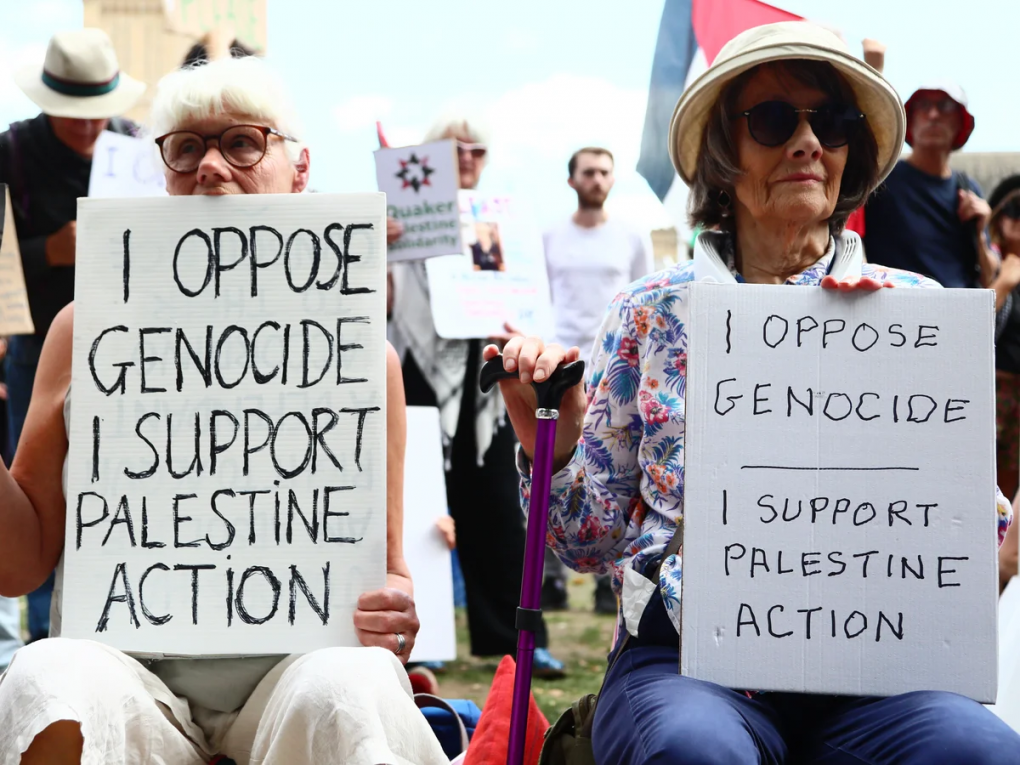
United Nations human rights experts have warned that the United Kingdom’s decision to designate the protest group Palestine Action as a “terrorist organisation” under the Terrorism Act 2000 is a misuse of counter-terrorism laws and a serious threat to the right to protest. Under international standards, protest actions that do not aim to kill or seriously injure people—such as acts involving property damage—should not be treated as terrorism.
The UK government argues that Palestine Action qualifies as a terrorist group because some of its members have entered military airbases and targeted arms and defence facilities with paint, graffiti, or other acts of criminal damage. However, UN experts and human rights lawyers point out that such acts can already be dealt with under ordinary criminal law, and that using counter-terrorism powers in these cases is unnecessary and disproportionate.
The proscription of Palestine Action means that membership, public support, organising meetings, or even displaying the group’s symbols can now lead to terrorism charges carrying prison sentences of up to 14 years. The UN Human Rights Commissioner has warned that this risks criminalising people who have not damaged property or harmed anyone, but have simply exercised their rights to free expression, assembly, and association. Since the ban came into force, hundreds of people have reportedly been arrested or investigated under terrorism laws.
Recent reporting highlights how these powers are affecting individuals in practice. In January 2026, The Guardian covered the case of Heba Muraisi, a hunger striker whose treatment by authorities has been linked to alleged connections with Palestine Action. Her case has raised concern that counter-terrorism measures are being used against people for protest-related activity or political solidarity, rather than for involvement in serious violence.
Experts warn that this approach blurs the line between protest and terrorism and creates a chilling effect on anyone who wants to take part in demonstrations. It weakens democratic debate in the UK and sets a dangerous example for other governments that may wish to silence dissent by labelling it “terrorism.” Protest and civil disobedience that do not involve intent to cause serious harm must remain outside the definition of terrorism.
As Right Defenders Initiative (RDI), we call on the UK government to reverse the proscription of Palestine Action, stop prosecutions based on this decision, and review counter-terrorism laws to ensure they respect international human rights standards. Using terrorism powers to suppress protest and free expression is unacceptable, and a healthy democracy depends on the ability to dissent without fear of criminalisation.
References
- https://www.ohchr.org/en/press-releases/2025/07/un-experts-urge-united-kingdom-not-misuse-terrorism-laws-against-protest
- https://www.ohchr.org/en/press-releases/2025/07/uk-palestine-action-ban-disturbing-misuse-uk-counter-terrorism-legislation
- https://www.wsws.org/en/articles/2025/06/06/udvx-j06.html
- https://www.libertyhumanrights.org.uk/issue/governments-use-of-terrorism-powers-against-protest-groups-sets-concerning-precedent
- https://aej-uk.org/2025/10/17/europes-human-rights-commissioner-calls-out-uk-protest-laws/
- https://una.org.uk/news/una-uk-calls-uk-government-uphold-right-peaceful-protest
- https://www.amnesty.org.uk/press-releases/uk-new-police-powers-tackle-protest-yet-another-attempt-clamp-down-human-rights
- https://www.theguardian.com/uk-news/2026/jan/12/hunger-striker-heba-muraisi-linked-palestine-action

