
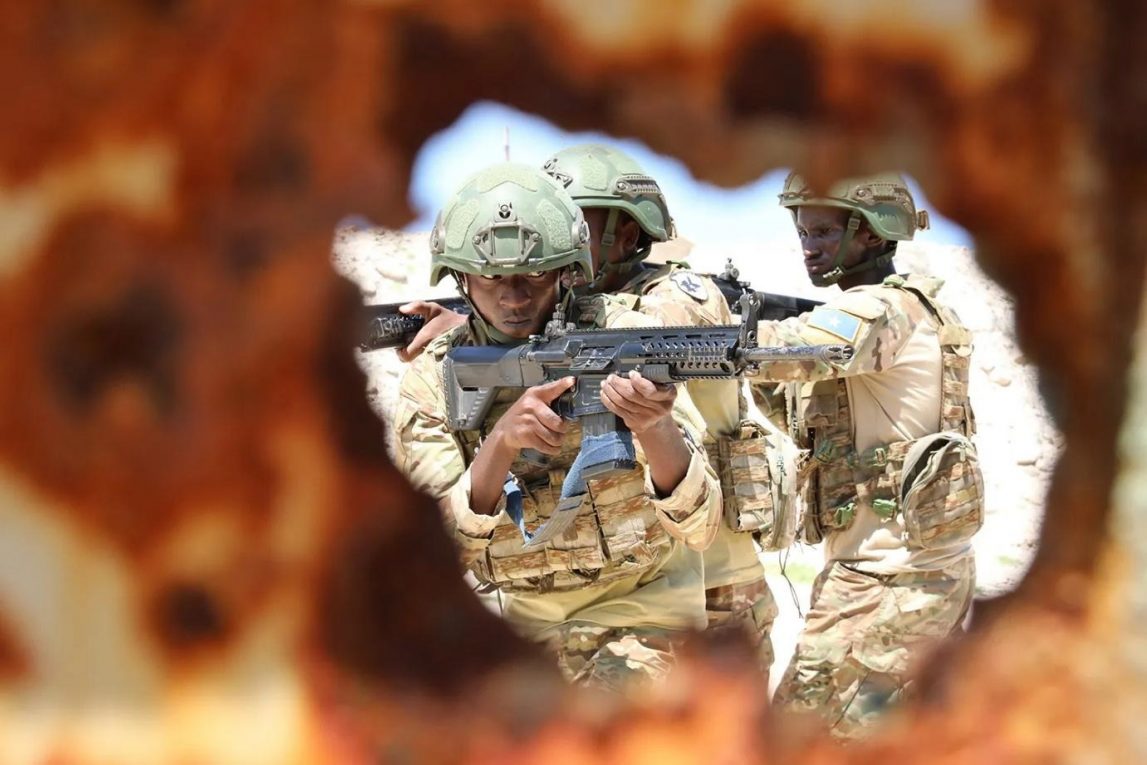
Recent findings from Foreign Policy (Ciddi & Doran, 2025) reveal that Turkey’s growing military and economic involvement in Africa has deepened instability rather than promoting peace. Over the past decade, Ankara has increased its diplomatic presence however, behind this diplomatic expansion lies a concerning pattern of arms transfers, drone exports, and private military operations led by groups such as SADAT, a pro-government mercenary company with links to former Turkish military officials.
According to the Foreign Policy article, Turkey has emerged as one of the largest arms suppliers to African states, particularly in the Sahel and the Horn of Africa. By 2024, Turkey reportedly matched Russia as the third-largest arms provider in West Africa, with drones alone making up more than a quarter of Turkish arms exports worth approximately $1.8 billion. Eighteen African countries, including Ethiopia, Libya, Sudan, and Burkina Faso, now operate Turkish drones, many of which have been used in ongoing civil conflicts.
The same report highlights that Turkey’s private military company, SADAT, founded by retired general Adnan Tanrıverdi, operates in at least nine African countries. SADAT presents itself as a consultancy and training firm but functions as a de facto extension of Ankara’s foreign policy. Its stated mission of promoting “Islamic unity under Turkish leadership” demonstrates how ideology and military strategy have become intertwined. SADAT has allegedly recruited Syrian mercenaries—some linked to extremist groups such as Jabhat al-Nusra and ISIS—to participate in African conflicts, notably in Libya, and Nigeria.
This is not the first time these alarming practices have been documented. The Rights Defenders Initiative (RDI) previously detailed similar patterns in its report, “Mercenaries and Proxy Forces: SADAT’s Operations in Conflict Zones” (2025). The RDI report available here exposed SADAT’s paramilitary role in facilitating illicit arms transfers and organizing combat units composed of non-state actors. It also drew attention to SADAT’s training camps in Libya and Syria, where fighters were reportedly prepared for deployment in Africa.
The Foreign Policy article further illustrates how Sudan has become a focal point of this dangerous trend. Despite Turkey’s official position as a mediator in the Sudanese civil conflict, Turkish-made weapons have fueled violence on both sides. Amnesty International (2024) and The Washington Post (2025) reported that Turkish companies sold drones and small arms to both the Sudanese Armed Forces (SAF) and the Rapid Support Forces (RSF)—often through sanctioned intermediaries. These sales violated international embargoes and supplied sanctioned leaders like Abdel Fattah al-Burhan. The result has been a cycle of escalating violence, where Turkish-manufactured drones and munitions have directly contributed to civilian casualties and regional instability.
Beyond Sudan, the risks are multiplying. The Foreign Policy piece warns that Turkish weaponry has appeared in South Sudan, Chad, and Burkina Faso, often through illicit channels. The Le Monde article further draws attention to SADAT’s shadow-presence in West Africa, noting its potential involvement in Niger and Mali as a “Turkish Wagner” type entity. Such proliferation threatens to empower armed factions, exacerbate ethnic and religious tensions, and destabilize entire regions already struggling with governance crises. In many of these states, SADAT has been present under the guise of training local forces, creating ambiguity between legitimate security cooperation and covert military intervention.
Analysts argue that Turkey’s involvement in Africa is driven not only by economic motives but also by ideological and geopolitical ambitions. This ideological projection, coupled with the lack of accountability mechanisms for Turkish arms exports, has created a fertile ground for human rights abuses and unlawful military influence across the continent.
As RDI’s earlier findings align closely with these new revelations, it is clear that SADAT and affiliated entities function as instruments of geopolitical expansion at the expense of peace and stability in Africa. Their activities undermine international law, violate arms embargoes, and fuel conflicts that displace millions of civilians.
The RDI calls on the United Nations, the European Union, and the African Union to urgently investigate the role of SADAT and associated defense companies in Africa’s armed conflicts. The global community must not remain silent while mercenary networks spread violence under political or ideological banners. Accountability, transparency, and justice must guide the response to prevent further harm and to uphold the rule of law across Africa.
References
- https://foreignpolicy.com/2025/10/28/turkey-africa-drones-sudan-arms-guns-conflict/
- https://rightsdefenders.org/wp-content/uploads/2025/02/Mercenaries-Report_SADAT-by-RDI_2025-.pdf
- https://www.amnesty.org/en/latest/research/2024/07/new-weapons-fuelling-the-sudan-conflict/
- https://www.lemonde.fr/en/le-monde-africa/article/2024/06/07/sadat-the-turkish-wagner-whose-shadow-hangs-over-west-africa_6674134_124.html
- https://www.washingtonpost.com/world/2025/03/15/turkey-drones-sudan-war/
- https://www.hrw.org/news/2024/09/12/libya-foreign-mercenaries

